
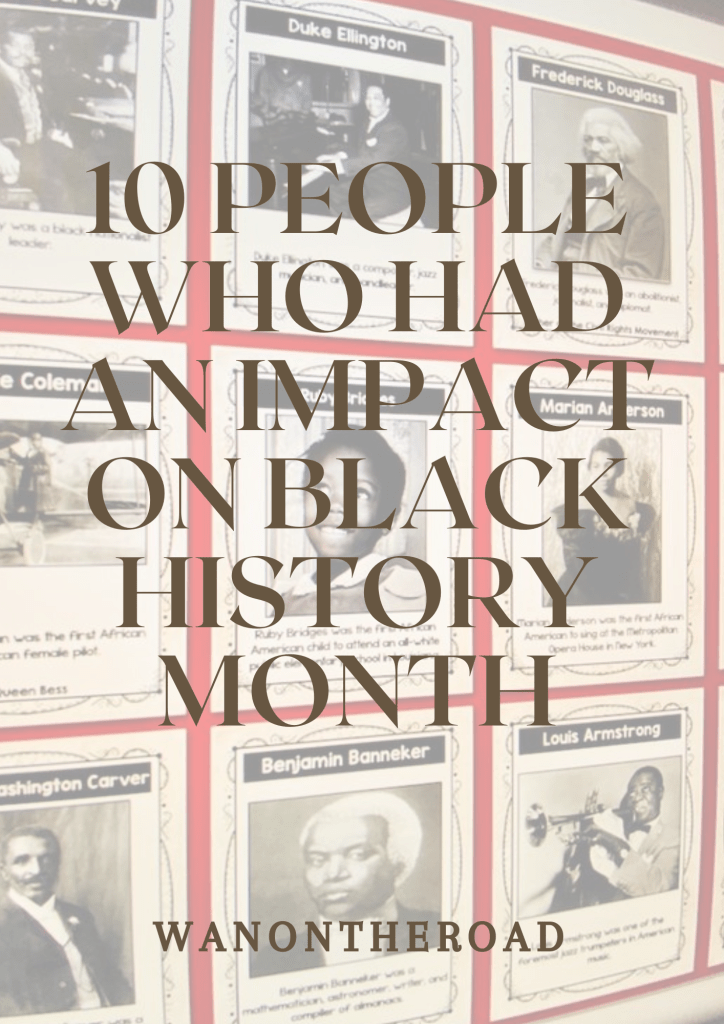
Black History Month was originally created in the 1920s as “Negro History Week” by historian Carter G. Woodson and the Association for the Study of Negro Life and History. It wasn’t until 1970 when President Gerald Ford expanded the event to an entire month, explaining that the United States needed to “seize the opportunity to honor the too-often neglected accomplishments of black Americans in every area of endeavor throughout our history.” Black history is celebrated in many countries around the world including the United States, United Kingdom, and Canada, and it’s important to recognize the greatest leaders, events, and important contributions of African Americans throughout history.
Since 1928, the Association for the Study of African American Life and History has provided a theme for Black History Month. In 2023, the theme is Black Resistance. There’s no better time than now to recognize the world’s greatest African-American leaders in all walks of life.
CLAUDETTE COLVIN
Nine months before Rosa Parks refused to give up her seat on the bus, fifteen-year-old Claudette Colvin would not move from hers. When told to give her place to a white passenger she replied, “it’s my constitutional right to sit here as much as that lady. I paid my fare, it’s my constitutional right.” She was removed from the bus by two white men and became the first person arrested in Montgomery, Alabama for challenging bus segregation. She was arrested on various charges and spent several hours in jail. She had to face a court appearance for her courageous act, and defiantly pled not guilty to every accusation against her. She was eventually placed on probation by the courts for violating segregation laws. While rarely receiving credit for her role in the civil rights movement, and often forgotten in Black history, her story is sure to inspire the young and old alike.
SHIRLEY CHISHOLM
Shirley Chisholm was a politician, author and educator. She was born in Brooklyn, New York to a Guyanese father and Barbadian mother. Shirley became the first Black woman in the United States to be elected to the U.S. congress, and the first woman and Black American to run for the Democratic Party’s presidential nomination. Chisholm courageously fought for the underprivileged and is credited with a major role in the creation of the WIC program; she also helped champion the fight to ensure workers received a minimum wage for their work.
VICTORIA “TOYA” MONTOU
Victoria Montou was a Haitian solider, midwife and spiritual leader. It is believed that she taught Haiti’s revolutionary leader, Jean-Jacques Dessalines, to fight in hand-to-hand combat. She also taught him to throw a knife and shoot a gun. She commanded soldiers in battle during the famous uprising against the French, that lead to Haiti becoming the first free Black nation in the western world. Upon her death, she was given a state funeral with a procession of eight sergeants.
Malcolm X
Malcolm X, original name Malcolm Little, Muslim name el-Hajj Malik el-Shabazz, African American leader and prominent figure in the Nation of Islam who articulated concepts of race pride and Black nationalism in the early 1960s. After his assassination, the widespread distribution of his life story—The Autobiography of Malcolm X (1965)—made him an ideological hero, especially among Black youth.
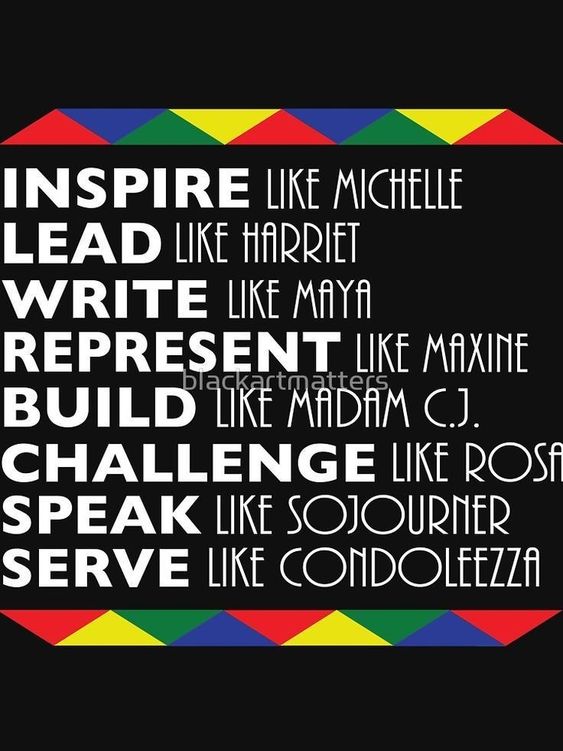
Madam C.J Walker
Madam C.J. Walker born Sarah Breedlove was an African American entrepreneur, philanthropist, and political and social activist. She is recorded as the first female self-made millionaire in America in the Guinness Book of World Records. Walker made her fortune by developing and marketing a line of cosmetics and hair care products for black women through the business she founded, Madam C. J. Walker Manufacturing Company. She became known also for her philanthropy and activism. She made financial donations to numerous organizations such as the NAACP, and became a patron of the arts. Villa Lewaro, Walker’s lavish estate in Irvington, New York, served as a social gathering place for the African-American community. At the time of her death, she was considered the wealthiest African-American businesswoman and wealthiest self-made black woman in America. Her name was a version of “Mrs. Charles Joseph Walker”, after her third husband.
Barack Obama
Barack Obama served as the 44th President of the United States. His story is the American story — values from the heartland, a middle-class upbringing in a strong family, hard work and education as the means of getting ahead, and the conviction that a life so blessed should be lived in service to others.
Maya Angelou
Maya Angelou born Marguerite Annie Johnson was an American memoirist, popular poet, and civil rights activist. She published seven autobiographies, three books of essays, several books of poetry, and is credited with a list of plays, movies, and television shows spanning over 50 years. She received dozens of awards and more than 50 honorary degrees. Angelou is best known for her series of seven autobiographies, which focus on her childhood and early adult experiences. The first, I Know Why the Caged Bird Sings (1969), tells of her life up to the age of 17 and brought her international recognition and acclaim. With the publication of I Know Why the Caged Bird Sings, Angelou publicly discussed aspects of her personal life. She was respected as a spokesperson for Black people and women, and her works have been considered a defense of Black culture. Her works are widely used in schools and universities worldwide, although attempts have been made to ban her books from some U.S. libraries. Angelou’s most celebrated works have been labeled as autobiographical fiction, but many critics consider them to be autobiographies. She made a deliberate attempt to challenge the common structure of the autobiography by critiquing, changing and expanding the genre. Her books center on themes including racism, identity, family and travel
Kofi Annan
Kofi Atta Annan was a Ghanaian diplomat who served as the seventh secretary-general of the United Nations from 1997 to 2006. Annan and the UN were the co-recipients of the 2001 Nobel Peace Prize. He was the founder and chairman of the Kofi Annan Foundation, as well as chairman of The Elders, an international organisation founded by Nelson Mandela.
Annan studied economics at Macalester College, international relations at the Graduate Institute Geneva, and management at MIT. Annan joined the UN in 1962, working for the World Health Organization’s Geneva office. He went on to work in several capacities at the UN Headquarters including serving as the Under-Secretary-General for peacekeeping between March 1992 and December 1996. He was appointed secretary-general on 13 December 1996 by the Security Council, and later confirmed by the General Assembly, making him the first office holder to be elected from the UN staff itself. He was re-elected for a second term in 2001 and was succeeded as secretary-general by Ban Ki-moon in 2007.
As secretary-general, Annan reformed the UN bureaucracy, worked to combat HIV/AIDS (especially in Africa) and launched the UN Global Compact. He was criticised for not expanding the Security Council and faced calls for his resignation after an investigation into the Oil-for-Food Programme, but was largely exonerated of personal corruption. After the end of his term as secretary-general, he founded the Kofi Annan Foundation in 2007 to work on international development. In 2012, Annan was the UN–Arab League Joint Special Representative for Syria, to help find a resolution to the ongoing conflict there. Annan quit after becoming frustrated with the UN’s lack of progress with regards to conflict resolution. In September 2016, Annan was appointed to lead a UN commission to investigate the Rohingya crisis.
Frederick Douglass
Frederick Augustus Washington Bailey was born into slavery on the Eastern Shore of the Chesapeake Bay in Talbot County, Maryland. The plantation was between Hillsboro and Cordova; his birthplace was likely his grandmother’s cabin east of Tappers Corner, and west of Tuckahoe Creek. In his first autobiography, Douglass stated: “I have no accurate knowledge of my age, never having seen any authentic record containing it.” In successive autobiographies, he gave more precise estimates of when he was born, his final estimate being 1817. However, based on the extant records of Douglass’s former owner, Aaron Anthony, historian Dickson J. Preston determined that Douglass was born in February 1818. Though the exact date of his birth is unknown, he chose to celebrate February 14 as his birthday, remembering that his mother called him her “Little Valentine.” Frederick Douglass (born Frederick Augustus Washington Bailey, c. February 1817 or 1818 – February 20, 1895) was an American social reformer, abolitionist, orator, writer, and statesman. After escaping from slavery in Maryland, he became a national leader of the abolitionist movement in Massachusetts and New York, becoming famous for his oratory and incisive antislavery writings. Accordingly, he was described by abolitionists in his time as a living counterexample to slaveholders’ arguments that slaves lacked the intellectual capacity to function as independent American citizens. Northerners at the time found it hard to believe that such a great orator had once been a slave. It was in response to this disbelief that Douglass wrote his first autobiography.
Harriet Tubman
Harriet Tubman born Araminta Ross, was an American abolitionist and social activist. Born into slavery, Tubman escaped and subsequently made some 13 missions to rescue approximately 70 slaves, including family and friends, using the network of antislavery activists and safe houses known as the Underground Railroad. During the American Civil War, she served as an armed scout and spy for the Union Army. In her later years, Tubman was an activist in the movement for women’s suffrage.
Born enslaved in Dorchester County, Maryland, Tubman was beaten and whipped by her various masters as a child. Early in life, she suffered a traumatic head wound when an irate overseer threw a heavy metal weight intending to hit another slave, but hit her instead. The injury caused dizziness, pain, and spells of hypersomnia, which occurred throughout her life. After her injury, Tubman began experiencing strange visions and vivid dreams, which she ascribed to premonitions from God. These experiences, combined with her Methodist upbringing, led her to become devoutly religious.
In 1849, Tubman escaped to Philadelphia, only to return to Maryland to rescue her family soon after. Slowly, one group at a time, she brought relatives with her out of the state, and eventually guided dozens of other slaves to freedom. Traveling by night and in extreme secrecy, Tubman (or “Moses”, as she was called) “never lost a passenger”. After the Fugitive Slave Act of 1850 was passed, she helped guide fugitives farther north into British North America (Canada), and helped newly freed slaves find work. Tubman met John Brown in 1858, and helped him plan and recruit supporters for his 1859 raid on Harpers Ferry.
When the Civil War began, Tubman worked for the Union Army, first as a cook and nurse, and then as an armed scout and spy. The first woman to lead an armed expedition in the war, she guided the raid at Combahee Ferry, which liberated more than 700 slaves. After the war, she retired to the family home on property she had purchased in 1859 in Auburn, New York, where she cared for her aging parents. She was active in the women’s suffrage movement until illness overtook her, and she had to be admitted to a home for elderly African Americans that she had helped to establish years earlier. She became an icon of courage and freedom.
Bonus!!!
Martin Luther King, Jr.
Born Michael Luther King, Jr., but later had his name changed to Martin. Martin Luther King became pastor of the Dexter Avenue Baptist Church in Montgomery, Alabama. Always a strong worker for civil rights for members of his race, King was, by this time, a member of the executive committee of the National Association for the Advancement of Colored People, the leading organization of its kind in the nation. He was ready, then, early in December, 1955, to accept the leadership of the first great Negro nonviolent demonstration of contemporary times in the United States, the bus boycott described by Gunnar Jahn in his presentation speech in honor of the laureate. The boycott lasted 382 days. On December 21, 1956, after the Supreme Court of the United States had declared unconstitutional the laws requiring segregation on buses, Negroes and whites rode the buses as equals. During these days of boycott, King was arrested, his home was bombed, he was subjected to personal abuse, but at the same time he emerged as a Negro leader of the first rank.At the age of thirty-five, Martin Luther King, Jr., was the youngest man to have received the Nobel Peace Prize for combating racial inequality through nonviolent resistance .
Oprah Winfrey
Oprah Gail Winfrey, often referred to mononymously as Oprah, is an American talk show host, television producer, actress, author, and philanthropist. She is best known for her talk show, The Oprah Winfrey Show, broadcast from Chicago, which ran in national syndication for 25 years, from 1986 to 2011. Dubbed the “Queen of All Media”, she was the richest African-American of the 20th century and was once the world’s only black billionaire. By 2007, she was sometimes ranked as the most influential woman in the world.
AMANDA GORMAN
Amanda S. C. Gorman is an American poet and activist. Her work focuses on issues of oppression, feminism, race, and marginalization, as well as the African diaspora. Gorman was the first person to be named National Youth Poet Laureate. She published the poetry book The One for Whom Food Is Not Enough in 2015. In 2021, she delivered her poem “The Hill We Climb” at the inauguration of U.S. President Joe Biden. Her inauguration poem generated international acclaim, and shortly thereafter, two of her books achieved best-seller status, and she obtained a professional management contract. In February 2021, Gorman was highlighted in Time magazine’s 100 Next list under the category of “Phenoms”, with a profile written by Lin-Manuel Miranda. That same month, Gorman became the first poet to perform at the Super Bowl, when she delivered her poem “Chorus of the Captains” at Super Bowl LV.
BESSIE COLEMAN
Bessie Coleman was the first woman of Black American and Native American descent to receive a pilot license. Born to a Black American mother and Native American father, Bessie was one of thirteen children. She would eventually move to Chicago with her brothers and became a manicurist. Intrigued with flying airplanes, Bessie was determined to become a pilot. Durning this time in U.S. history, there were no flight schools that would accept white women as students nor men of color. As a Black and Native American woman, she had a “triple negatives” working against her, but she wouldn’t let this reality stop her from achieving her dream. She learned that women and persons of color could receive a pilot’s license in France, so she began studying the French language to prepare for her trip. Jesse Binga, a Black Chicago-based bank owner and business man, funded her travels and schooling. On November 20, 1921, Bessie sailed to Paris, where she would study at the Fédération Aéronautique Internationale. Upon completion of her studies, Coleman became the first Black American and Native American man or woman to earn a pilot’s license from the school. Bessie returned to the U.S. to much fanfare from her community and would go on to become an exhibition pilot, drawing crowds of all races.
Happy February… Happy Month of Love and Happy Black History Month🎉

GoWithMeSomewhere


 WanOnTheRoad